An inscription is the shortest piece of writing most people will ever commission, and very often the longest-lasting. Six or eight words cut into the back of a pendant will still be legible when everyone who chose them has gone, which puts a surprising amount of pressure on a line of text that usually gets decided in a rush at the checkout.
Engraving suits Clogau jewellery particularly well, and for a practical reason as much as a sentimental one. A good many Clogau designs have a flat, solid reverse that an engraver can work on properly, and the pieces are made to be kept rather than replaced, so an inscription has something durable to sit on. Adding words to a piece that will be worn for forty years is a very different proposition from adding them to something that will be worn for two.
What follows is the practical side of it: which pieces physically take an inscription and which fight it, how hand and machine engraving differ and how each ages, how much text realistically fits, how to choose a typeface that survives being small, and how to write something that still reads well in three decades. There is also the point nobody enjoys discovering late, which is that an engraved piece cannot go back.
The Surfaces That Take an Inscription Properly
The engraver’s requirement is simple and unglamorous: a flat area, solid metal beneath it, and enough of it to work at a legible size. Anything that meets those three conditions will engrave cleanly, and anything that fails one of them will be a compromise however much you want it to work.
Flat Backs and Solid Discs: The Straightforward Cases
The reverse of a solid pendant is the classic engraving surface and remains the best. It is flat or gently curved, it is hidden against the wearer, and it usually offers the largest uninterrupted area on the piece. Across Clogau’s pendant and necklace designs the solid-backed pieces are the ones to shortlist if engraving is part of the plan from the start.
Discs are better still, since they are designed as a flat plane and have no design on the reverse competing for space. A locket adds another option again, because the inside of the case can carry words alongside a photograph, and the two together do something neither manages alone.
The inside of a bangle is the third good surface, and the most elegant of the three. The words sit against the wrist, invisible to everyone including the wearer for most of the day, and they are found again every time the bangle goes on. Within Clogau’s bracelet and bangle range the solid bangles are the ones with an interior worth writing on, and the heavier designs in the men’s gift selection generally give an engraver the most room to work.
The Pieces That Will Fight You
Heavily textured surfaces are the first problem. Where a design already carries a pattern, a hammered finish or a raised motif, an engraved line has to compete with everything else happening on the metal, and it loses. The result reads as damage rather than as text, which is the opposite of the intention.
Stone-set surfaces are the second, and the objection is structural as well as visual. Metal around settings is thin, the settings themselves are what hold the stones in, and engraving near them risks the security of the piece. No competent engraver will cut close to a setting, which usually means the available area is far smaller than it looks.
Fine chains, filigree work and pieces with an open or pierced construction simply have nowhere to put the words. This is worth checking early, because it is entirely possible to fall for a design, plan the wording and only then find that the piece cannot carry it. Browsing the full Clogau jewellery collection with engraving in mind from the outset is a quicker route than falling in love first and asking afterwards.
Hand Engraving and Machine Engraving, and How Each Ages
Hand engraving is done with a graver, a hardened tool pushed through the metal, and it removes material to leave a cut with a bright, faceted floor. It catches the light. The line varies in width as the engraver’s pressure varies, which is why hand work has a liveliness that machine work does not, and why no two hand-engraved inscriptions are identical.
Machine engraving, whether rotary or laser, produces a consistent line of even depth and width. It is accurate, repeatable, better at small text than a hand can be, and considerably less expensive. For a long inscription in a small space it is often the only method that will work at all.
How the Two Age: Depth Is What Matters
Over years of wear, both fill with the ordinary residue of a life, and both soften as the metal around them polishes down against skin and clothing. Depth is what decides how long an inscription lasts, not the method used to create it. A deep machine cut will outlast a shallow hand cut comfortably.
Where they differ is in character. Hand engraving mellows: the bright cut dulls, the facets soften, and the line takes on the same warmth as the metal around it. Laser marking, which alters the surface rather than cutting deeply into it, can fade on a surface that is rubbed constantly, so it suits a locket interior or a bangle inside rather than the back of a ring that is worn daily.
How Much Actually Fits
Most people ask for roughly twice what will comfortably fit. The engraver will make it work by shrinking the text, and the piece comes back technically correct and effectively unreadable, which nobody wanted.
A useful discipline is to think in short lines rather than character counts. Two lines of a few words each, or three at the outside, will sit at a size an ageing pair of eyes can manage without help. A single date and a single name is almost always enough, and the best-loved inscriptions tend to be the shortest, because brevity leaves room for the words to be cut properly.
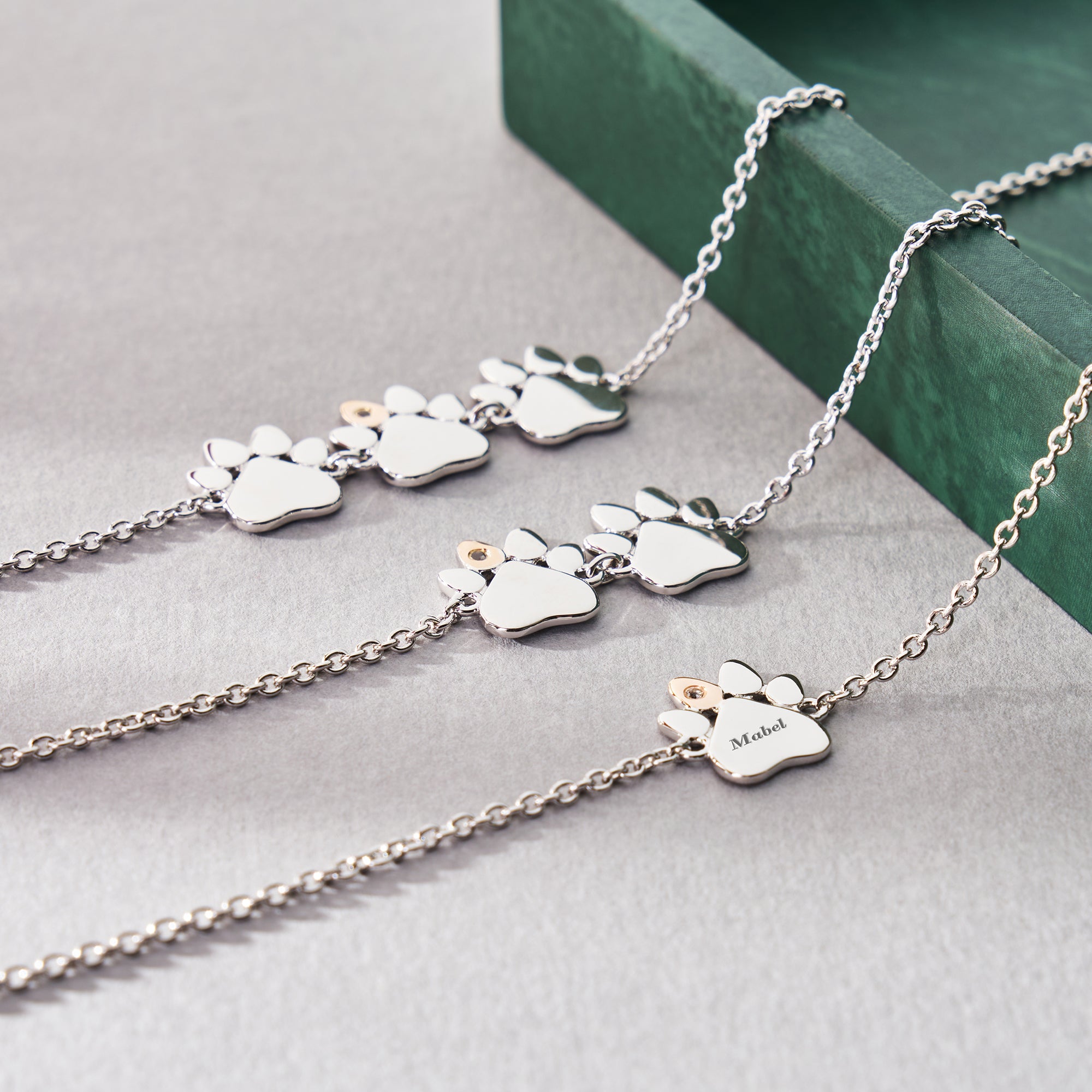
Charms are the tightest case of all, and also one of the best. There is space for a date or a handful of letters and no more, which forces a decision. A charm from Clogau’s charm collection engraved with a single date and added to a bracelet already on the wrist can carry more meaning than a far larger gift, precisely because the constraint did the editing.
Choosing a Font That Survives Being Small
Script fonts look beautiful in a proof at screen size and are the most frequent regret at actual size. Their strokes vary from hairline to broad, and when the whole inscription is a few millimetres tall the hairlines effectively disappear. What is left is a pretty shape that has to be deciphered rather than read.
A clean serif or a simple block face holds up far better. The strokes are more even, the letterforms are more distinct from one another, and the text stays readable at a glance and at arm’s length, which is how anyone will actually encounter it. Numbers benefit most from this, since a badly rendered 3, 8 and 6 become interchangeable at small sizes and a date is precisely the thing you want unambiguous.
Capitals are worth considering for very short inscriptions. Initials and a year in clean capitals read cleanly from across a room and age well. For anything longer than a few words, mixed case is easier on the eye, since word shapes help the reader in a way an unbroken run of capitals does not.
Writing Something That Still Reads Well in Thirty Years
The test to apply is whether the words will make sense to someone who was not there. Private jokes and references to a shared moment feel like the obvious choice at the time and can read as bewildering later, sometimes to the recipient themselves. A date, a name, a plain statement of the relationship: these are the inscriptions that hold.
Read It Aloud, Then Cut a Third
Anything that sounds laboured when spoken will read worse when it is cut permanently into metal and cannot be revised. Say the line out loud. If it feels like a greetings card, it is too long or too composed, and the fix is nearly always to remove words rather than to change them.
Consider also who else will eventually read it. An inscription is a private message that becomes a public one over time, first to family, then to whoever inherits the piece. Words that can bear that shift, without embarrassment and without needing explanation, are the ones worth committing to.
Engraving Is Final, So Settle Everything Else First
An engraved piece cannot be returned or exchanged. Once the metal is cut the piece is unique to one person and cannot go back into stock, which is the whole appeal and also a genuine constraint on the buying process. Everything that would ordinarily be resolved by sending something back has to be resolved before the order is placed.
Sizing is the main casualty. A ring or a bangle that would normally be swapped for the next size up becomes a permanent problem once it carries an inscription. Measure properly, or discreetly borrow something the recipient already wears, and settle the size before the wording is even discussed.
The same applies to the design itself. Be certain the piece is right for the person, in weight, in style and in how much attention it draws, because something not quite right cannot be quietly exchanged afterwards. That is a good argument for starting from what you already know they wear, which is what Clogau’s gift ideas for her are arranged to help with.
Conclusion: Words That Outlast the People Who Chose Them
Engraved jewellery has a habit of resurfacing a generation or two after it was given, in a house being cleared or a box nobody had opened in years, carrying a name and a date that somebody then has to piece together. Sometimes the connection is obvious and the piece goes straight back into wear. Sometimes it takes a family conversation and an old photograph to work out who the initials belonged to.
Either way the inscription has done something no unengraved piece can. It has held a specific person and a specific day in a material that outlasts both, which is a considerable thing to ask of eight words on the back of a pendant, and one they generally manage.
That is worth keeping in mind at the point of choosing. Take the extra day over the wording, pick the surface that will hold it cleanly, choose the font that will still be legible when the light is poor and the reader’s eyes are not what they were. The words are going to be there far longer than the occasion that prompted them.
About the Author